

Key Takeaways
A founder’s guide to marketplace MVP development: how to beat the chicken-and-egg problem and launch with the liquidity that actually makes a marketplace work.
- Marketplaces fail on liquidity, not features. An empty marketplace is useless no matter how well it’s built.
- Seed the hard side first. Usually supply. Once it’s active, the other side gets 2 to 10 times easier to attract.
- Go narrow to get dense. Win one city, campus, or niche completely before expanding.
- Fake the network manually at first. Airbnb, DoorDash, and Eventbrite all created liquidity by hand before automating it.
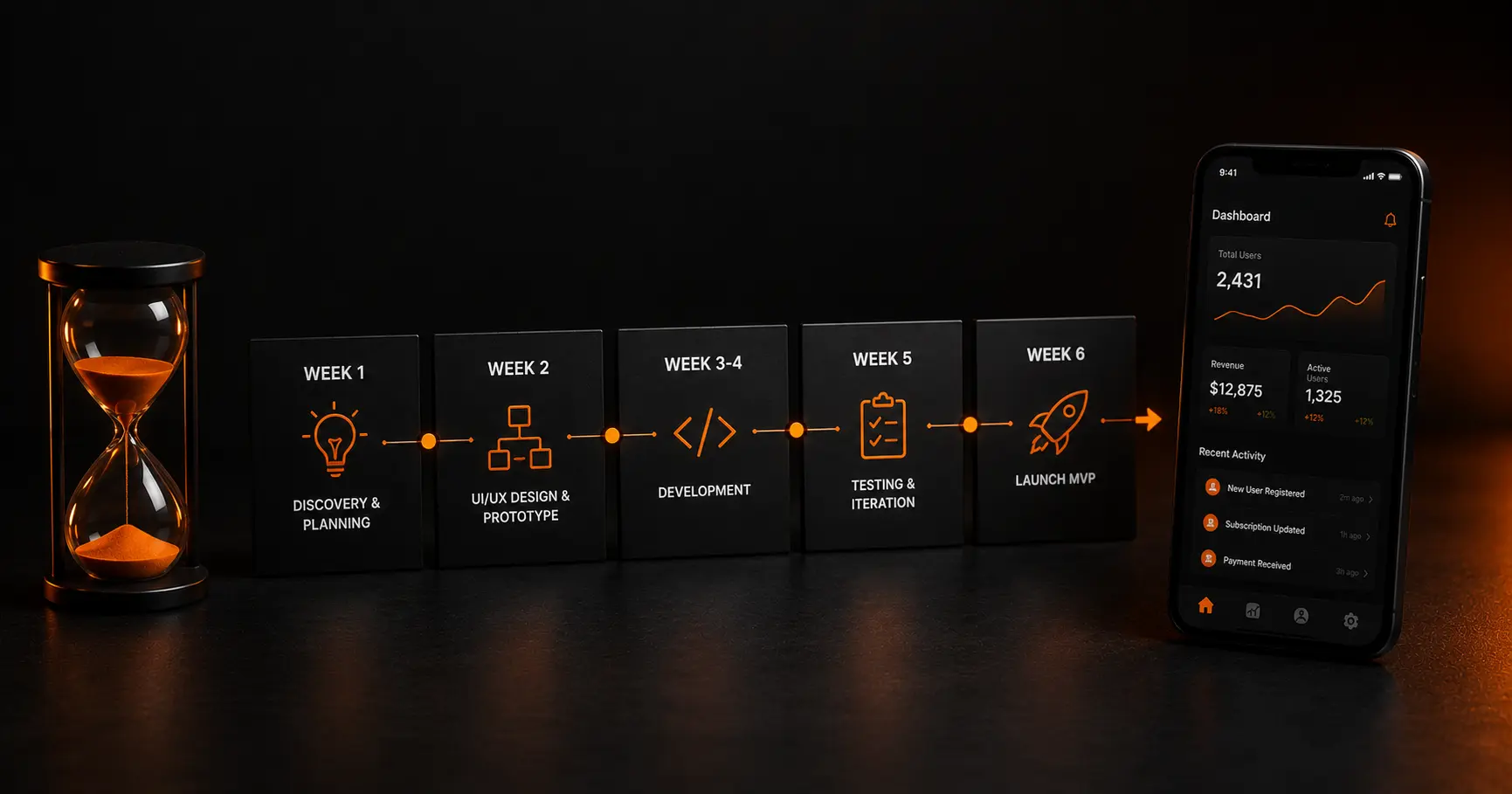
- A marketplace MVP costs $12,500–$40,000 and can launch in 4 to 12 weeks with a disciplined scope.
Most marketplace MVP projects don’t fail because the app was built badly. They fail because nobody solved the chicken-and-egg problem: buyers won’t show up without sellers, sellers won’t show up without buyers, and a beautifully built but empty marketplace is worth exactly nothing. Liquidity, not features, is the product.
That changes how you should build. A marketplace MVP is less about shipping listings and search, and more about engineering the first transactions by hand until the network can stand on its own. This guide covers what a marketplace MVP really is, which side to seed first, the proven tactics for launching with liquidity, the features you actually need, and what it costs in 2026.
What Is a Marketplace MVP, and Why Is It Harder Than a Normal MVP?
A marketplace MVP is the smallest version of a two-sided platform that can facilitate a real transaction between a buyer and a seller. Unlike a normal MVP, where you validate one product with one type of user, a marketplace has to attract two distinct groups at once and get them to transact, which is a fundamentally harder problem.
That’s the trap founders walk into. They scope a marketplace MVP like a SaaS MVP, focusing on features, when the real challenge is demand and supply arriving at the same time and place. You can build every feature perfectly and still have a ghost town. The job of a marketplace MVP is to prove that, in some narrow slice of the world, both sides will show up and a transaction will happen. Everything else is secondary. A marketplace MVP isn’t judged by how complete the platform looks, but by whether a real buyer paid a real seller in a transaction you can repeat.
What Is the Chicken-and-Egg Problem?
The chicken-and-egg problem is the marketplace cold-start dilemma: neither side of the market wants to join until the other side is already there. Sellers see no buyers and leave; buyers see no listings and leave. Without intervention, the marketplace never reaches the critical mass where it becomes useful on its own.
This is why marketplaces are among the hardest startups to launch and among the most defensible once they work. The network effects that make an empty marketplace worthless are the same ones that make a liquid marketplace nearly impossible to displace. The entire early game is getting past the cold start, and the founders who win treat it as a manual, hands-on problem rather than a “build it and they will come” one.
Which Side Should You Seed First: Supply or Demand?
Seed the harder side first, which in most marketplaces is supply. The logic, laid out well by NfX, is that whichever side is hardest to acquire is usually the more valuable, and once you have enough of them, the other side becomes 2 to 10 times easier to pull in.
There’s a nuance for the earliest stage. Before you’ve proven anyone wants the transaction at all, validate demand first, because a marketplace with supply and no demand is just a directory nobody uses. In practice that means concentrating supply in a narrow segment while confirming real buyers will pay. If you already own strong demand from an existing business, the reverse applies: open up supply and let it meet the audience you have. As Andrew Chen, who wrote the book on the cold start problem, puts it, the first job is getting a single “atomic network” to work, not the whole market. The practical takeaway is to pick one side, one segment, and go deep, rather than trying to balance the entire market at once.
How Do You Launch a Marketplace MVP With Liquidity?
You launch with liquidity by manufacturing it manually in a tiny, dense segment before you automate anything. Liquidity is the odds that a listing quickly finds a match, and early on you create those odds by hand. Three tactics do most of the work.
Go narrow to get dense. Win one city, one campus, or one vertical completely instead of spreading thin across many. A marketplace that’s liquid in a single ZIP code beats one that’s empty everywhere. Narrowing the time window helps too, which is why auctions and markets concentrate activity.
Build a single-player tool first. Give the supply side something useful before any buyers exist. Eventbrite started as ticketing software for event organizers, built up a base of supply, then turned on the demand side. The tool creates a reason to join before the network exists.
Do things manually. DoorDash’s founders posted local restaurant menus and personally took orders, picked up food, and delivered it around the Stanford campus before building any logistics software. A concierge approach like this creates real transactions, builds trust, and teaches you what the product actually needs, long before automation is worth building.
How Do You Measure Marketplace Liquidity?
Liquidity is the single metric that tells you whether a marketplace is working, so measure it from the very first transaction. The clearest definition is the percentage of listings or requests that result in a successful transaction within a reasonable window.
Track a handful of signals: match rate, meaning the share of buyers who search and then actually transact; time to match, meaning how long a listing waits for a buyer or a request waits for a seller; and supply utilization, meaning the share of sellers who get at least one order. Gross merchandise value matters eventually, but early on it hides more than it reveals, because a few power users can mask a fundamentally illiquid market.
Here’s why this matters: a marketplace can show growing signups on both sides and still be dying, if those users never transact. Signups are vanity; matches are the product. Optimize relentlessly for the percentage of intents that become completed transactions, and the other numbers follow.
What Features Does a Marketplace MVP Need?
A marketplace MVP needs just enough to support one real transaction end to end. Seven features cover it, and payments can even be deferred to save time and money early on:
- Dual profiles for the two sides of the market.
- Listing management so supply can create and edit offerings.
- Search and filters so demand can find what they want.
- Payments with commission splitting, typically via Stripe Connect.
- Reviews and ratings to build the trust a marketplace runs on.
- In-app messaging so the two sides can coordinate.
- An admin back-office so you can manage and moderate.
Deferring real payments to just after the MVP can cut around $8,000 and two weeks off the build, which is reasonable if you’re still proving liquidity. Everything beyond these seven, from recommendation engines to loyalty programs, is a post-liquidity problem.
What Does a Marketplace MVP Cost and How Long Does It Take?
A marketplace MVP costs $12,500 to $40,000 in 2026 for a lean-to-custom build, and how you build determines both price and timeline. A no-code platform launches fastest and cheapest; a fully custom US agency build costs more and takes longer.
| Build Option | Typical Cost | Timeline |
| No-code (Sharetribe, Bubble) | $12,500–$25,000 | ~4–8 weeks |
| Lean custom MVP | $15,000–$40,000 | 7–12 weeks |
| Full custom (US agency) | $40,000–$60,000+ | 14–24 weeks |
The most important budget decision isn’t the build option, though. It’s remembering that the supply side is the real product early on. Recruiting 20 to 50 quality sellers by hand before spending a dollar on buyer acquisition gives you a far higher conversion rate and teaches you what suppliers actually need. Spend on liquidity, not just software.
How Do Marketplace MVPs Make Money?
Most marketplaces make money with a take rate, a commission on each transaction, typically 10 to 20 percent depending on the category. It aligns your revenue with the value you create, because you only earn when a transaction happens, which is also why liquidity comes first and monetization second.
Other models exist: listing fees, subscriptions for premium placement or seller tools, and lead fees where you charge for introductions rather than completed transactions. Many marketplaces blend them, but a commission on completed transactions is the cleanest default for an MVP. The common mistake is switching on monetization too early, before there’s enough liquidity to justify taking a cut. In the seeding phase it’s often smart to charge nothing, prove both sides get value, and introduce fees once transactions are reliable. You can’t take a percentage of a market that isn’t transacting yet.
What Are the Most Common Marketplace MVP Mistakes?
The most common marketplace MVP mistake is trying to launch both sides everywhere at once. Spreading thin guarantees an empty marketplace on both sides. The other recurring errors compound it:
- Building features instead of liquidity. A polished app with no transactions is a failed marketplace.
- Automating too early. Software before you understand the transaction bakes in the wrong assumptions.
- Ignoring trust. Without reviews, verification, and safe payments, neither side commits.
- Scaling before density. Expanding to new cities before the first one is liquid just multiplies the cold-start problem.
- Treating supply as an afterthought. In the early days, supply is the product, and it has to be recruited, not waited for.
Notice the pattern: every one of these mistakes trades the hard, unglamorous work of building liquidity for the easier comfort of building more software. The market only rewards the former.
How Do You Build a Marketplace MVP the Right Way?
Build a marketplace MVP by pairing a lean, transaction-ready product with a hands-on plan to manufacture liquidity in one narrow segment. The build should be fast and cheap enough that most of your energy goes into seeding supply and closing the first real transactions, not into features nobody can use yet.
This is exactly how Velcod approaches marketplace builds within MVP development for non-technical founders. The MVP ships with the seven essentials on a no-code or low-code stack fast enough to start creating liquidity in weeks, with full code ownership so you can scale or migrate later. You can see marketplace builds among the case studies, where two-sided products launched in weeks rather than quarters.
The founders who win marketplaces obsess over the first hundred transactions, not the thousandth feature. Get one atomic network liquid, prove the transaction, and only then invest in scale. If you’re building a marketplace and want an MVP designed around liquidity from day one, talk to the team.
Frequently Asked Questions
What is the chicken-and-egg problem in a marketplace?
It’s the cold-start dilemma where neither side will join until the other is present: buyers won’t come without sellers, and sellers won’t come without buyers. Because an empty marketplace has no value, founders must manufacture early liquidity by hand, usually by seeding the supply side first and creating the first transactions manually.
Which side of a marketplace should you build first?
Seed the harder side first, which is usually supply, because once it’s active the other side becomes 2 to 10 times easier to attract. The exception is the earliest stage, where you validate demand to prove the transaction is wanted. If you already have strong demand, open supply to meet your existing audience.
How much does it cost to build a marketplace MVP?
A marketplace MVP costs $12,500 to $40,000 in 2026. A no-code build on Sharetribe or Bubble runs $12,500–$25,000 in about 4 to 8 weeks, a lean custom build $15,000–$40,000, and a full custom US-agency build $40,000 or more over 14 to 24 weeks. Deferring real payments can cut roughly $8,000 and two weeks.
What features does a marketplace MVP need?
Seven essentials: dual profiles, listing management, search and filters, payments with commission splitting, reviews and ratings, in-app messaging, and an admin back-office. Payments can be deferred just past launch to save time and money. Anything beyond these, like recommendation engines, is a post-liquidity concern, not an MVP feature.
How do you get liquidity in a new marketplace?
Manufacture it manually in one narrow, dense segment. Concentrate supply in a single city or niche, build a single-player tool that’s useful before buyers arrive, and create the first transactions by hand, as DoorDash and Airbnb did. Prioritize trust and density over scale until the network can sustain itself.
Resources & Further Reading
- NfX: 19 Tactics for the Chicken-or-Egg Problem: the definitive playbook for marketplace cold starts.
- Andrew Chen: the author of The Cold Start Problem on network effects and atomic networks.
- Harvard Business Review: Pipelines, Platforms, and the New Rules of Strategy: why network effects make marketplaces defensible.
- Stripe Connect: the standard for marketplace payments and commission splitting.
- Y Combinator Startup Library: founder guidance on marketplaces and early traction.
- Sharetribe: Chicken-and-Egg Problem: a practical primer on marketplace liquidity.