

Key Takeaways
A founder’s vetting guide to hiring a mobile app development company for your startup, with the checklist and red flags that prevent an expensive rebuild.
- Verify live apps, not logo grids. Download and test apps they shipped in the last year, published under their own developer account.
- Own everything. Insist on the code, the App Store and Google Play accounts, and the signing keys from day one.
- Cross-platform is usually the startup pick. It costs 30 to 45% less than building separate native apps.
- Watch the first-call quote. A firm price before any scoping usually means a low bid now and scope charges later.
- Treat vetting as a 4 to 6 week process. Three extra weeks of diligence beats a $200,000 rebuild.
Hiring a mobile app development company for your startup is a bet you often can’t afford to lose twice. Pick the wrong partner and you don’t just lose money, you lose months and end up paying again for a rebuild, sometimes north of $200,000. The founders who avoid that outcome treat vetting as a structured four-to-six-week process, not a two-week scramble to the lowest bid.
The good news is that a mobile app company reveals itself quickly if you know what to check. This guide gives you the vetting checklist, the red flags that should end a conversation, the exact questions to ask, what it should cost in 2026, and the ownership terms that keep you from getting locked out of your own app.
Quick Verdict: Hire a mobile app development company that shows live, recent apps in the App Store and Google Play under its own developer account, covers both platforms, gives you full code and store-account ownership, and offers a post-launch plan. Expect $20,000 to $50,000 for a cross-platform MVP. Walk away from anyone who quotes a firm price on the first call or gets vague about who owns the code. Want a straight answer on your app? Talk to Velcod.
What Does a Mobile App Development Company Do for a Startup?
A mobile app development company designs, builds, ships, and ideally maintains your iOS and Android app, handling everything from UX design to app store submission. For a startup, the good ones do more than write code: they help scope the MVP, choose the right build approach, and get you live in the stores without you needing an in-house mobile team.
That breadth is the point. A non-technical founder shouldn’t have to learn Swift, Kotlin, app store review rules, and release management to launch. A capable partner absorbs all of it and hands back a working, owned product. The risk is that “mobile app development company” covers everyone from world-class studios to template shops, which is exactly why vetting matters more than the pitch. The stakes are higher than web work, too, because a mobile app lives inside two strict app stores and on devices you don’t control, so mistakes are more visible and slower to fix.
How Do You Vet a Mobile App Development Company?
Vet a mobile app development company by verifying real, shipped work and honest process, not by comparing quotes. The single most revealing check is their live portfolio, because in mobile, you can actually download and test what they claim to have built.
Green Flags: Look For These
- Live, recent store apps. Apps you can download from the App Store and Google Play right now, published under their developer account, and shipped in the last year rather than 2019.
- Both platforms and store handling. They cover iOS and Android and manage submission and review, not just the build.
- Independent reviews. Verified reviews on Clutch and GoodFirms, which interview real clients and publish reviews the company can’t edit.
- A structured process. Discovery, sprints, demos, and testing, with transparency about what went wrong on a past project.
- A trial sprint option. Willingness to prove themselves on a small paid engagement before a multi-month contract.
Red Flags: Walk Away
- A logo grid instead of live apps. If you can’t download and test their work, assume it isn’t theirs.
- A firm quote on the first call. Quoting low to win, then billing scope changes later, is the oldest trick in the book.
- No clarifying questions. Eagerly agreeing to a vague idea signals they don’t understand your problem or don’t care to.
- Vague ownership. No clear answer on who owns the code, the store accounts, or the signing keys.
- No post-launch plan. A team that disappears at launch leaves you stranded when the first OS update breaks something.
What Questions Should You Ask Before Hiring?
The right questions expose a weak partner fast. Ask these and listen for specifics, not reassurance:
- “Can I download and test apps you shipped in the last 12 months?” Recent, live proof beats any case study slide.
- “Are those apps published under your developer account?” It confirms the work is actually theirs.
- “What went wrong on a recent project, and how did you handle it?” Honest teams answer; nervous ones deflect.
- “Was your last project’s final cost within 20% of the original estimate?” This surfaces whether they scope accurately or quote low to win.
- “Who owns the code, the store accounts, and the signing keys?” The answer should be you, unambiguously.
- “What’s your post-launch maintenance plan?” Apps need OS updates and fixes, so this can’t be an afterthought.
What Does It Cost to Hire a Mobile App Company in 2026?
Hiring a mobile app development company for a startup costs $20,000 to $50,000 for a cross-platform MVP in 2026, and more for complexity. The build approach is the biggest cost lever, because a cross-platform app uses one codebase for both stores instead of two separate native builds.
| App Type | Cross-Platform (2026) | Notes |
| Simple MVP | $20,000–$50,000 | One codebase, both stores |
| Mid-complexity | $25,000–$80,000 | Real features, integrations |
| Enterprise-grade | $80,000–$200,000+ | Heavy scope, compliance |
Cross-platform development runs 30 to 45 percent cheaper than building separate native apps, since one team serves both platforms. The savings come mostly from engineering; strategy and backend work cost the same either way. Be wary of quotes far below these ranges, because suspiciously low pricing almost always returns as scope-change invoices later.
Cross-Platform or Native: What Should a Startup Choose?
Most startups should choose cross-platform. Frameworks like Flutter and React Native let one team build both the iOS and Android apps from a single codebase, cutting cost by 30 to 45 percent and shipping in roughly two to four months, which is exactly the balance an early-stage product needs.
Native development, separate Swift and Kotlin apps, delivers the highest polish and is worth it for graphics-heavy or hardware-intensive apps, but it roughly doubles the effort and cost. For a startup validating an idea, that premium rarely pays off at the MVP stage. A good company will recommend cross-platform when it fits and be honest about the rare cases where native is genuinely worth the extra spend.
Freelancer, Agency, or In-House: Which Is Right for a Startup?
There’s no single right answer, only the right fit for your budget and stage. Each option trades cost against reliability and coverage.
| Option | Best For | Watch Out For |
| Freelancer | Small, well-defined apps on a tight budget | Single point of failure; you manage QA and store submission |
| App development company | Founders needing a shipped, owned app end to end | Quality varies; vet hard for live apps and ownership |
| In-house team | Funded startups where the app is the core product | Expensive and slow to hire senior mobile talent |
For most early startups, a vetted company is the sweet spot. A freelancer can be cheaper for a simple app but leaves you carrying project management, testing, and store submission yourself, and a single illness or disappearance can stall the whole project. In-house makes sense once the app is your core product and you can afford a full mobile team. Start with a company, and bring it in-house later if the product justifies it.
The Ownership Terms That Protect Your Startup
The ownership terms in your contract matter as much as the code itself. You must own the source code, the Apple Developer and Google Play accounts, and the signing keys from day one, with everything transferring to you as work is delivered.
The signing keys are the trap founders miss. If the company holds your Android keystore or Apple certificates, you may be unable to update your own app, and losing them can force a brand-new store listing that wipes out your ratings and installs. Put “work made for hire” and full account and key ownership in writing before the project starts. A company that resists this is telling you how the relationship will go, and it’s the most useful thing they’ll reveal.
What Should the Engagement Look Like After You Sign?
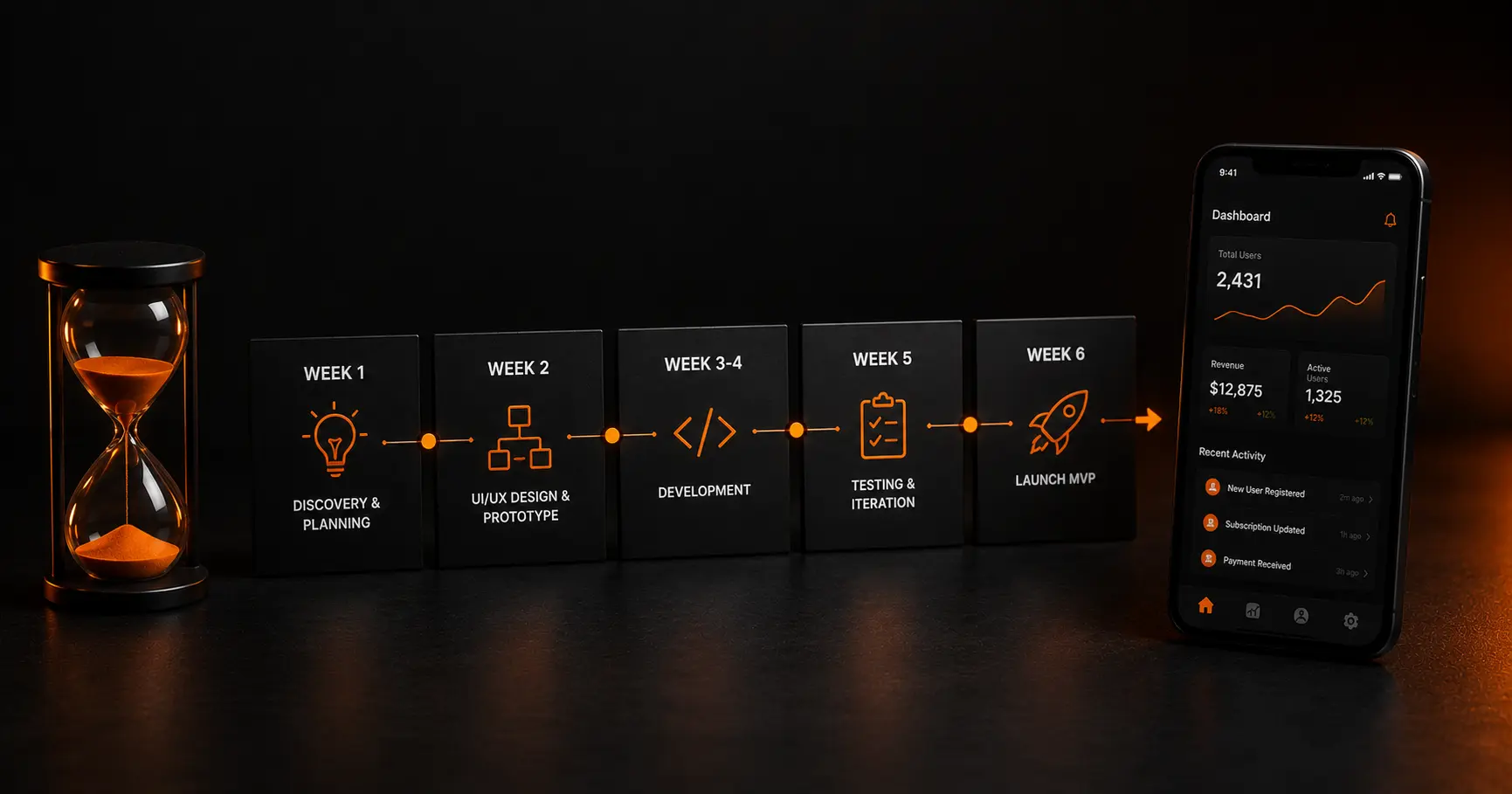
A good engagement is predictable, and knowing its shape helps you spot a disorganized partner early. Expect a short discovery phase that locks scope and design, then build sprints with a working demo every week or two so you see progress and catch drift before it compounds.
Testing should run throughout, not just at the end, followed by app store submission where the company handles Apple and Google review. After launch, expect a defined support window for bug fixes and OS updates. Throughout, you should have direct access to the people building your app and a shared view of progress, not monthly status emails filtered through an account manager. If the process is vague before you sign, it will be chaotic after, so treat clarity here as part of the vetting.
Who Should, and Shouldn’t, Hire a Mobile App Company?
Hire one if you’re a non-technical founder who needs a real iOS and Android app shipped and owned, and you’d rather buy senior mobile experience than spend months hiring an in-house team. For most early startups, a vetted company is the fastest, lowest-risk path to a launched app.
Don’t hire one if you already have a strong in-house mobile team with capacity, or if you haven’t validated the problem yet. If you’re unsure anyone wants the app, a cheap prototype or a no-code build teaches you more than a full agency engagement. Validate first, then hire to build the version worth paying for.
How Velcod Builds Mobile Apps for Startups
Velcod is a mobile app development partner built for non-technical founders. That means cross-platform builds that ship fast and affordably, full ownership of the code, store accounts, and signing keys handed to you, live apps you can verify, and a launch process that includes store submission and post-launch support. No logo-grid portfolios and no lock-in.
You can see real products in the case studies, built and shipped for founders in weeks rather than quarters. Every one of the vetting standards in this guide is simply how the studio operates, because the goal is a launched, owned app, not a dependency on us. If you’re ready to hire a partner and want to skip the guesswork, book a call and get a straight quote.
Vetting a mobile app company well is unglamorous work, but it’s the difference between launching once and paying twice. Verify the apps, own the assets, and choose the team that answers hard questions plainly.
Frequently Asked Questions
How much does it cost to hire a mobile app development company?
A cross-platform MVP typically costs $20,000 to $50,000 in 2026, mid-complexity apps run $25,000 to $80,000, and enterprise-grade builds exceed $80,000. Cross-platform is 30 to 45 percent cheaper than separate native apps because one team serves both stores. Treat quotes far below these ranges as a warning sign, not a bargain.
How do I verify a mobile app development company’s portfolio?
Download and test their apps from the App Store and Google Play yourself, and confirm the apps are published under their own developer account. Check how recent the work is, since apps from years ago say little about current capability. Logo grids and screenshots aren’t proof; a live, working app you can install is.
What are the biggest red flags when hiring an app developer?
A firm quote on the first call, a portfolio you can’t download and test, no clarifying questions about your idea, vague answers on who owns the code and store accounts, and no post-launch support plan. Any one is a reason to keep looking. Suspiciously low pricing usually returns as scope-change invoices later.
Should a startup build a cross-platform or native app?
Most startups should choose cross-platform. Frameworks like Flutter and React Native build both iOS and Android from one codebase, cutting cost 30 to 45 percent and shipping in two to four months. Native is worth the extra cost only for graphics-heavy or hardware-intensive apps, which most early-stage MVPs are not.
Who should own my app’s code and store accounts?
You should, from day one. The contract should state “work made for hire,” with the source code, Apple Developer and Google Play accounts, and signing keys transferring to you. The signing keys especially matter: if the developer keeps them, you may be unable to update your app or could lose your ratings in a forced re-listing.
Resources & Further Reading
- Clutch: independent, verified agency reviews, the gold standard for vetting development companies.
- GoodFirms: another directory with interviewed client reviews you can cross-check.
- G2: user ratings and reviews for software and development vendors.
- Apple App Store: verify a company’s live iOS apps and their ratings.
- Google Play: verify a company’s live Android apps and reviews.
- Statista: mobile app market and usage data for context.