
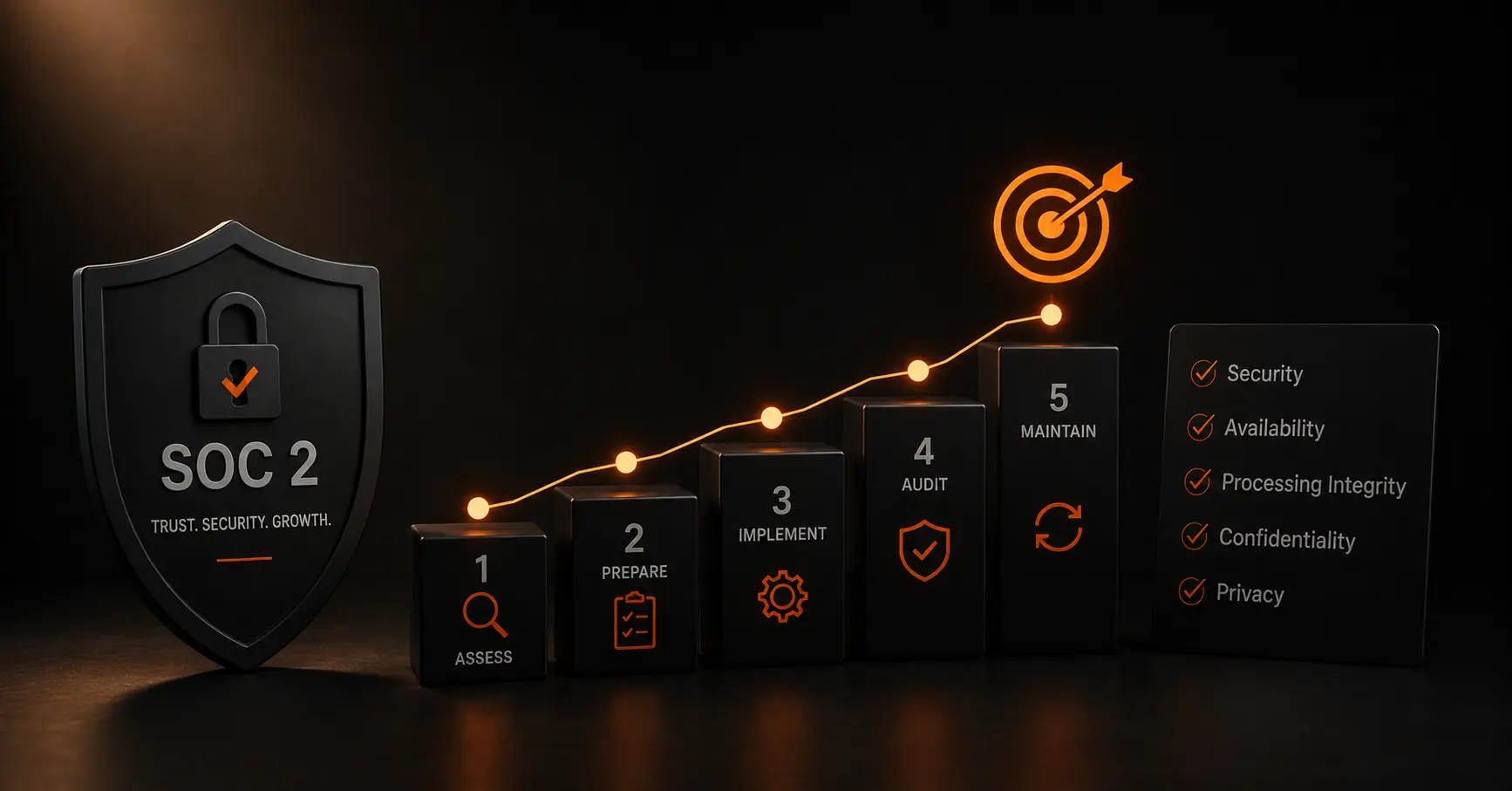
Key Takeaways
A practical SOC 2 roadmap for SaaS founders: what it is, what it costs in 2026, and how it turns stalled enterprise deals into signed contracts.
- SOC 2 is a sales unlock, not just a checkbox. Most enterprise B2B SaaS deals now require a report before procurement will sign.
- Most startups should go straight to Type II. Around 98% of Fortune 500 buyers expect it, so a Type I first often means paying twice.
- Budget realistically: first-year all-in cost runs $25,000–$80,000, and the audit fee is only about 40% of that.
- Security is the only required criterion. You add Availability, Confidentiality, Processing Integrity, or Privacy based on what customers ask for.
- Build controls into the architecture early. Retrofitting security for an audit is the slow, expensive way to get compliant.
The first time a SOC 2 for SaaS requirement kills a deal, most founders are blindsided. The product won the evaluation, the champion is sold, and then procurement asks for a SOC 2 report you don’t have, and the deal stalls indefinitely. It’s not a product problem. It’s a trust-documentation problem, and it’s entirely solvable.
Over 70% of enterprise B2B SaaS deals now expect a SOC 2 report before contracts get signed. This guide is for founders selling into mid-market and enterprise accounts who need to understand what SOC 2 actually involves: the difference between Type I and Type II, what it costs and how long it takes in 2026, the step-by-step roadmap to get certified, and how to build a product that’s ready for the audit instead of scrambling for it.
What Is SOC 2, and Why Does It Matter for SaaS Startups?
SOC 2 is an independent audit that verifies your company protects customer data the way you claim to. It’s governed by the AICPA, which defines the underlying Trust Services Criteria, and the result is a report a third-party auditor issues after examining your security controls.
For a SaaS startup, SOC 2 matters for one blunt reason: it’s the price of selling to serious buyers. Enterprise security teams can’t take your word that you encrypt data and control access, so they ask for proof that an auditor already verified. SOC 2 is that proof. It has become the universal language of trust in the cloud economy, and without it, larger buyers simply can’t clear you through their vendor-risk process.
It’s worth being clear about what the report is not. SOC 2 is not a government license or a one-time certificate you frame on the wall. It’s an auditor’s opinion, valid for a defined window, that you renew each year to stay current.
SOC 2 Type I vs Type II: Which Does a Startup Need?
Type I tests whether your controls are designed correctly on a single date, while Type II tests whether those same controls actually operated effectively over a 3-to-12-month window. Type II is harder, takes longer, and carries far more weight.
Most B2B SaaS companies should go straight to Type II. Roughly 85% of mid-market buyers and 98% of Fortune 500 buyers expect it, so leading with a Type I often means paying for the process twice. The exception: choose Type I first if you need something in hand in under six months and you’re selling mainly to small businesses. If you’re targeting enterprise and have a 9-to-12-month runway, Type II is the destination.
How Does SOC 2 Unblock Enterprise Deals?
SOC 2 unblocks deals by replacing weeks of back-and-forth with a single trusted document. Without it, every prospect sends an 80-question security questionnaire, your team scrambles to answer, legal gets pulled in, and the deal drifts for months. With a SOC 2 report, you send one PDF that an auditor already validated.
The revenue math is stark. Sales cycles shrink by three months or more once security review stops being a custom project for every deal. Companies with strong, documented data-privacy practices win competitive enterprise bids at meaningfully higher rates. And if your median enterprise deal is worth six figures, a single contract that stalls for lack of SOC 2 can cost more than the entire first-year compliance investment. Compliance stops looking like overhead and starts looking like pipeline.
Picture the difference in practice. A mid-market prospect’s security team sends the usual questionnaire. Without SOC 2, your founders spend a week drafting answers, legal reviews them, and the buyer’s risk team still wants a call. With SOC 2, you attach the report, procurement checks its box, and the conversation moves on to pricing. Same product, weeks of friction removed.
When Should a SaaS Startup Start SOC 2?
Start SOC 2 the moment selling to mid-market or enterprise becomes part of your plan, not the day a buyer demands it. Because a Type II observation period runs 3 to 12 months, the report you need in Q4 has to begin in Q1 or Q2. Founders who wait for the first security questionnaire are already a quarter or two behind the deals they want.
There’s a practical trigger too: the first time a prospect asks for your SOC 2 report, assume the next ten will as well. If you’re pre-revenue and selling only to small businesses, it can wait. If you’re raising, moving upmarket, or seeing enterprise logos in your pipeline, that’s the signal to begin the readiness work now while it’s cheap and unhurried rather than under deal pressure later.
What Does SOC 2 Cost, and How Long Does It Take in 2026?
A first-year SOC 2 Type II for a startup with 10 to 50 employees typically costs $25,000 to $80,000 all-in, and the audit fee itself is only about 40% of that. The rest goes to readiness work, security tooling, internal time, and legal review. Here’s the honest breakdown:
| Report Type | What It Proves | 2026 Cost (startup) | Timeline |
| Type I | Controls designed correctly on one date | $5,000–$20,000 audit; more all-in | 3–8 months |
| Type II | Controls operated effectively over time | $25,000–$80,000+ first year | 6–20 months incl. observation |
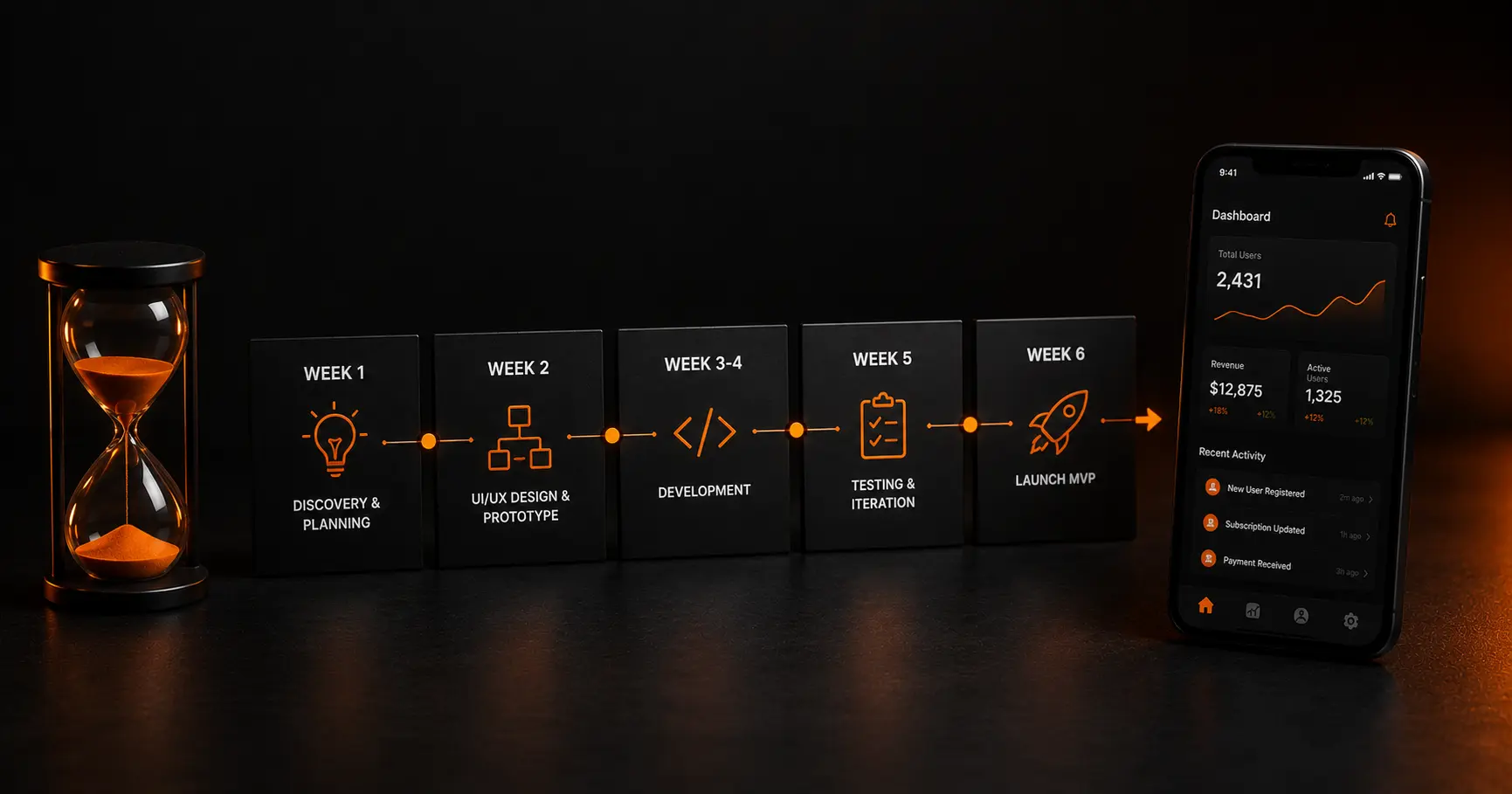
The single biggest timeline driver is the Type II observation period, which runs 3 to 12 months while your controls are watched in action. That window is why founders who wait until a buyer demands SOC 2 are already months behind. Starting early is the cheapest decision you can make.
The SOC 2 Compliance Roadmap: 7 Steps
Getting to a SOC 2 report follows a well-worn path. These are the steps that take a SaaS startup from zero to a shareable report.
- Scope it and pick your criteria. Security is always required. Add Availability, Confidentiality, Processing Integrity, or Privacy only if you commit to them or customers ask.
- Run a gap assessment. A readiness review shows the distance between your current controls and what the audit expects.
- Implement controls and write policies. Access control, encryption, logging, backups, incident response, and vendor management, documented and enforced.
- Choose tooling and an auditor. A compliance-automation platform like Vanta, Drata, or Secureframe collects evidence continuously, and an independent CPA firm performs the audit.
- Collect evidence over the observation period. For Type II, your controls run and are monitored for 3 to 12 months.
- Complete the audit. The auditor reviews evidence and tests your controls.
- Get the report and renew. Share it under NDA with prospects, and treat SOC 2 as annual, not one-and-done.
What Are the Five Trust Services Criteria?
SOC 2 is built on five Trust Services Criteria, and you don’t need all five. Security is mandatory and forms the Common Criteria (CC1 through CC9) that every audit covers: risk management, access control, and incident response. The other four are optional and chosen based on what you promise customers.
Availability covers uptime, backups, and disaster recovery. Confidentiality covers protecting sensitive data through classification and encryption. Processing Integrity covers whether your system does what it’s supposed to, accurately and completely. Privacy covers how you handle personal information. A focused scope keeps the audit affordable, so resist the urge to include criteria your buyers never asked for. Guides from Drata and Secureframe map each criterion in detail.
What SOC 2 Mistakes Do Startups Make Most?
The most expensive SOC 2 mistake is treating it as a last-minute scramble instead of an architecture decision. Founders who bolt on security controls the month a deal demands them pay more, move slower, and stress their teams. Other recurring mistakes are worth avoiding:
- Over-scoping the criteria. Adding all five when buyers only expect Security and Availability inflates cost and effort.
- Collecting evidence by hand. Manual screenshots and spreadsheets don’t scale and break at renewal. Automation platforms exist for this.
- Doing Type I when you needed Type II. Selling to enterprise and starting with Type I usually means running the whole process twice.
- Ignoring continuous monitoring. SOC 2 is annual, and controls that lapse between audits fail the next one.
Every one of these is cheaper to avoid up front than to fix under a buyer’s deadline, which is exactly why starting early pays off.
SOC 2 vs ISO 27001, HIPAA, and GDPR: What’s the Difference?
SOC 2 is the most common first ask from US enterprise buyers, but it’s not the only framework, and knowing where it fits saves wasted effort. Each one answers a different question for a different audience.
SOC 2 is a US-centric attestation report issued by a CPA firm that proves your controls work, and it’s the default expectation for North American B2B buyers. ISO 27001 is an international certification for a formal information security management system, often preferred by European and global enterprises. HIPAA applies specifically to protected health information in US healthcare, and GDPR is a European data-privacy law rather than a certification you can buy. Many SaaS startups begin with SOC 2, then add ISO 27001 or HIPAA only when a market or customer segment demands it. Chasing all of them at once wastes runway you can’t spare.
How to Build SaaS That’s SOC 2-Ready From Day One
The cheapest SOC 2 is the one you designed for before writing the code. When access controls, encryption, audit logging, and backups are part of the architecture from the start, readiness becomes a documentation exercise instead of a rebuild. Frameworks like those from NIST and the Cloud Security Alliance give you a foundation that maps cleanly to the Trust Services Criteria.
This is where the build partner matters. Velcod builds SaaS products for founders with the controls auditors look for wired in from the first sprint: role-based access, encryption in transit and at rest, audit trails, and sensible data handling. That doesn’t replace an auditor, but it means your SOC 2 process starts from a strong position instead of a pile of technical debt. You can see how that architecture-first approach plays out in the case studies.
SOC 2 is not the thing that makes your product good. It’s the thing that lets good products get bought. Treat it as part of your go-to-market from the day you decide to sell upmarket, and it becomes a competitive edge rather than a fire drill. If you’re building a SaaS product with enterprise ambitions, talk to the team about designing it compliance-ready from the start.
Frequently Asked Questions
How much does SOC 2 cost for a SaaS startup in 2026?
A first-year SOC 2 Type II typically costs $25,000 to $80,000 all-in for a startup with 10 to 50 employees. The audit fee alone is roughly $8,000 to $50,000, but that’s only about 40% of the total once readiness work, security tools, internal time, and legal review are included. Type I is cheaper, at $5,000 to $20,000 for the audit.
How long does it take to get SOC 2 compliant?
A SOC 2 Type I takes about 3 to 8 months end to end. Type II takes longer, commonly 6 to 20 months, because it includes an observation period of 3 to 12 months during which your controls must operate and be monitored. Starting before a customer demands it is the only way to avoid losing deals to the timeline.
Do SaaS startups need SOC 2 Type I or Type II?
Most B2B SaaS startups selling to enterprise should pursue Type II directly, since around 98% of Fortune 500 buyers expect it. Choose Type I only if you need proof in under six months and sell mainly to small businesses. Leading with Type I when your buyers want Type II usually means paying for the process twice.
What are the five SOC 2 Trust Services Criteria?
The five are Security, Availability, Processing Integrity, Confidentiality, and Privacy. Security is required in every SOC 2 audit and covers the Common Criteria. The other four are optional and added based on what you promise customers. Most SaaS startups scope to Security plus Availability, and sometimes Confidentiality, to keep the audit focused and affordable.
Is SOC 2 the same as ISO 27001?
No. SOC 2 is a US-centric attestation report issued by a CPA firm, common with North American buyers. ISO 27001 is an international certification for an information security management system, often preferred by European and global enterprises. Some startups pursue both, but SOC 2 is usually the first ask from US enterprise customers.
Resources & Further Reading
- AICPA: the body that governs SOC 2 and defines the Trust Services Criteria.
- Vanta: compliance-automation platform and practical SOC 2 readiness resources.
- Drata: Trust Services Criteria: a clear breakdown of each SOC 2 criterion.
- Secureframe: Trust Services Criteria: guidance on scoping and controls for SOC 2.
- NIST: security control frameworks that map to SOC 2 requirements.
- Cloud Security Alliance: cloud security best practices and assurance guidance.