

Key Takeaways
A founder’s guide to SaaS MVP development: what a subscription-ready product actually needs, and the over-engineering traps that waste your runway.
- Billing belongs in from day one. Retrofitting subscriptions onto a live product is one of the most expensive tasks in SaaS, so wire in Stripe early.
- A subscription-ready SaaS MVP costs $30,000–$60,000 for a standard B2B build with roles, billing, and integrations.
- Skip microservices. They cost 2 to 3 times more at startup scale; a modular monolith ships faster and is easy to split later.
- Build one core feature well, plus auth, multi-tenancy, and a way to get paid. Everything else is version two.
- Over-engineering, not under-building, kills most SaaS MVPs. Amazon Prime Video even moved back to a monolith and cut costs 90%.
Most SaaS MVP development fails in one of two opposite ways: founders either ship something too thin to charge for, or they over-engineer a system built for a million users they don’t have yet. The second mistake is quieter and more expensive. It burns months and budget building scale nobody needs while the product still hasn’t proven anyone will pay.
A subscription-ready SaaS MVP is a narrow slice of product with the commercial plumbing to charge for it, built on an architecture simple enough to move fast and flexible enough to grow later. This guide covers exactly what to include, why billing has to go in early, and the over-engineering traps that quietly drain startup runway.
What Is a SaaS MVP, and How Is It Different From a Regular MVP?
A SaaS MVP is the smallest version of a subscription software product that a customer can sign up for, use, and pay for on a recurring basis. The difference from a generic MVP is the “subscription-ready” part: it needs accounts, permissions, data separation between customers, and working recurring billing from the start.
That’s what makes SaaS MVPs trickier than a one-off app. A simple app can validate an idea with a single screen. A SaaS product has to handle multiple users, keep each customer’s data isolated, and collect money on a schedule without breaking. The trap is assuming “subscription-ready” also means “enterprise-scale.” It doesn’t. You need the commercial plumbing, not the infrastructure of a company a hundred times your size. Put plainly, a SaaS MVP is judged by whether one customer can sign up, get real value, and pay, not by whether it could theoretically serve a million of them on launch day.
What Should a Subscription-Ready SaaS MVP Include?
A subscription-ready SaaS MVP needs exactly six things and nothing more. Get these right and you have a product you can sell. Add anything else and you’re probably over-building.
- Authentication and roles. Sign-up, login, and basic role-based access so admins and members see different things.
- One core feature. The single workflow that delivers your main value, done well.
- Multi-tenancy. Clean data isolation between customers, usually a shared database with row-level security to start.
- Subscription billing. Plans, a free trial, proration, and failed-payment handling through Stripe Billing.
- Onboarding and activation. A path that gets a new user to first value fast, because day-one confusion is day-one churn.
- Basic admin and analytics. Enough visibility to manage accounts and see what users actually do.
Notice what’s missing: no custom-built billing engine, no microservices, no single sign-on, no five pricing tiers. Those come later, if the market asks.
Why Does Subscription Billing Have to Go in Early?
Subscription billing has to go in early because retrofitting it onto a live product is one of the most expensive engineering tasks in SaaS. Billing touches your data model, your permissions, and your core feature, so bolting it on after launch means reworking all three.
The billing itself is real work: trial logic, proration when someone upgrades mid-cycle, dunning for failed payments, and tax compliance typically add $8,000 to $30,000 to a build. That sounds like a lot until you price the alternative, which is rebuilding your product’s foundation six months in while customers are already using it. Using a provider like Stripe instead of a custom system removes most of the risk, because the hard parts of recurring payments are already solved. The rule is simple: Stripe Billing goes in at the start, not after launch.
What Over-Engineering Traps Should You Avoid?
The most damaging SaaS MVP mistake is building for scale you haven’t earned. Premature microservices are the single most common over-engineering trap, and they can sink a young team in infrastructure work that delivers zero customer value.
The evidence is overwhelming. Martin Fowler’s “MonolithFirst” argues you should almost always start with a monolith and extract services only when growth demands it. Instagram, Netflix, and Uber all began monolithic. Amazon Prime Video famously moved a service back from microservices to a monolith and cut costs by 90%, admitting the distributed design was over-engineered. Microservices typically cost two to three times more at startup scale, and the real trigger to adopt them is organizational, around 15-plus engineers stepping on each other, not technical.
The over-engineering traps to skip in an MVP:
- Microservices and Kubernetes. Use a modular monolith you can split later.
- A custom billing system. Stripe already solved this.
- Five pricing tiers on day one. Start with one or two.
- Custom-built authentication. Use a provider like Supabase Auth, Clerk, or Auth0.
- SSO and SAML before an enterprise buyer asks. It’s a sales-driven feature, not a launch feature.
- Premature caching, sharding, and multi-region. Solve scale problems when you have scale.
Paul Graham’s “Do Things That Don’t Scale” makes the deeper point: early on, doing things manually and simply beats building elaborate systems for a scale you’re only imagining.
Single-Tenant vs Multi-Tenant: What Does a SaaS MVP Need?
Most SaaS MVPs should start multi-tenant with a shared database and strict data isolation, not a separate instance per customer. A shared database with row-level security keeps costs low and shipping fast while still keeping each customer’s data private.
Single-tenant setups, where every customer gets their own isolated instance, make sense for heavy compliance or enterprise deals, but they add cost and operational overhead most early startups don’t need yet. Start shared, keep the boundaries clean, and you can offer dedicated instances later for the enterprise customers who require them. Designing for that flexibility is smart. Building all of it on day one is the over-engineering trap wearing a different hat.
What Tech Stack Should a SaaS MVP Use?
The best SaaS MVP stack is boring, proven, and fast to build on. Novelty is a cost you pay in bugs and hiring, so save your innovation budget for the product, not the plumbing.
A dependable 2026 default looks like this: a React framework such as Next.js on the front end, a managed backend and database like Supabase so you skip weeks of setup, an authentication provider instead of hand-rolled auth, Stripe for billing, and hosting on a platform like Vercel. Managed tools like these are a big reason SaaS MVP costs have dropped in recent years.
The principle underneath the specifics matters more than the names: choose managed services that remove undifferentiated work, keep everything in one codebase, and pick technologies a future engineer can actually be hired to maintain. A clever, exotic stack impresses no customer and scares off your next developer.
What Does a SaaS MVP Cost and How Long Does It Take in 2026?
A subscription-ready SaaS MVP typically costs $15,000 to $80,000 in 2026, and scope is the biggest lever. Modern tooling like Supabase and Vercel has cut backend setup time dramatically, which is why costs have fallen over the past few years. Here’s the honest landscape:
| SaaS MVP Type | Typical 2026 Cost | What’s Included |
| Lean single-workflow SaaS | $10,000–$20,000 | One feature, auth, basic billing |
| Standard B2B SaaS | $30,000–$60,000 | Roles, Stripe billing, integrations, admin, onboarding |
| Multi-tenant or AI-native SaaS | $20,000–$60,000+ | Heavier data model, AI features, deeper infra |
Two numbers to plan for: subscription billing accounts for $8,000 to $30,000 of that work, and infrastructure runs a modest $100 to $500 per month at MVP scale. Timeline-wise, a disciplined SaaS MVP ships in a few weeks to a few months depending on scope. If yours is quoted at a year, the scope isn’t minimal.
What Are the Most Common SaaS MVP Mistakes?
The most common SaaS MVP mistakes come from building the wrong things, not too few things. Founders add complexity that feels responsible but delays the only thing that matters, which is putting a payable product in front of real users.
- Leaving billing for later. The single most expensive rework in SaaS.
- Over-engineering the architecture. Microservices and Kubernetes before product-market fit.
- Too many pricing tiers. Decision paralysis for buyers and engineering overhead for you.
- Ignoring onboarding. A great feature nobody can figure out still churns.
- Building for imagined scale. Optimizing for users you don’t have while ignoring the ones you could win.
CB Insights consistently finds that building without genuine market demand is a top reason startups fail. Over-engineering is how founders spend their runway proving they can build, instead of proving someone will buy.
What Should You Track After Launch?
Launch is where SaaS MVP development actually starts, because a subscription product only proves itself through retained, paying users. Track a small set of numbers from day one instead of waiting until you “have time.”
The essentials are activation rate (how many new users reach first value), week-one retention (how many come back), and early revenue signals like trial-to-paid conversion and churn. These tell you whether the product works far better than feature requests or compliments do. Wiring analytics in at launch is cheap, while adding it after you’ve already lost the data is not.
The goal isn’t a dashboard to impress investors. It’s a feedback loop that tells you what to build next, so your second sprint aims at what users actually do rather than what you assumed they’d want. Founders who instrument early make sharper decisions with less money, which is exactly the advantage an MVP is supposed to buy you.
How Do You Build a SaaS MVP That’s Ready to Scale Later?
You build for scale later by keeping the architecture simple now and the boundaries clean. A modular monolith, clear separation between features, a managed database, and Stripe for billing gives you a product that ships in weeks and can be split into services the day real growth demands it. That’s the balance: not under-built, not over-built.
This is the approach Velcod takes with SaaS development for non-technical founders. Subscription billing, multi-tenancy, and auth go in from the first sprint on a stack that’s fast to build and straightforward to scale, with full code ownership so nothing locks you in. You can see how that plays out in the case studies, where subscription-ready products shipped in weeks rather than quarters.
The lean startup principle holds: build the smallest thing that proves people will pay, learn from real usage, and only then invest in scale. If you’re planning a subscription product and want it built subscription-ready without the over-engineering tax, talk to the team about scoping it properly.
Frequently Asked Questions
How much does SaaS MVP development cost in 2026?
A subscription-ready SaaS MVP typically costs $15,000 to $80,000. A lean single-workflow product runs $10,000–$20,000, while a standard B2B SaaS with roles, Stripe billing, integrations, and onboarding lands at $30,000–$60,000. Subscription billing alone accounts for $8,000–$30,000 of that, which is why it should be scoped in from the start.
What should a SaaS MVP include?
A subscription-ready SaaS MVP needs six things: authentication with roles, one strong core feature, multi-tenancy for data isolation, Stripe billing with trials and dunning, onboarding that reaches first value fast, and basic admin and analytics. Anything beyond that, including microservices, SSO, or many pricing tiers, is usually over-engineering at the MVP stage.
Should a SaaS MVP use microservices or a monolith?
Start with a monolith. Microservices cost two to three times more at startup scale and add infrastructure work that delivers no customer value early on. Even Amazon Prime Video moved a service back to a monolith and cut costs 90%. Use a modular monolith so you can extract services later, once team size and growth actually justify it.
Can I add subscription billing to my SaaS later?
You can, but it’s one of the most expensive changes in SaaS. Billing touches your data model, permissions, and core feature, so adding it after launch means reworking your foundation while customers are live. Integrating Stripe Billing from the start is far cheaper and lower risk than retrofitting recurring payments onto a running product.
How long does it take to build a SaaS MVP?
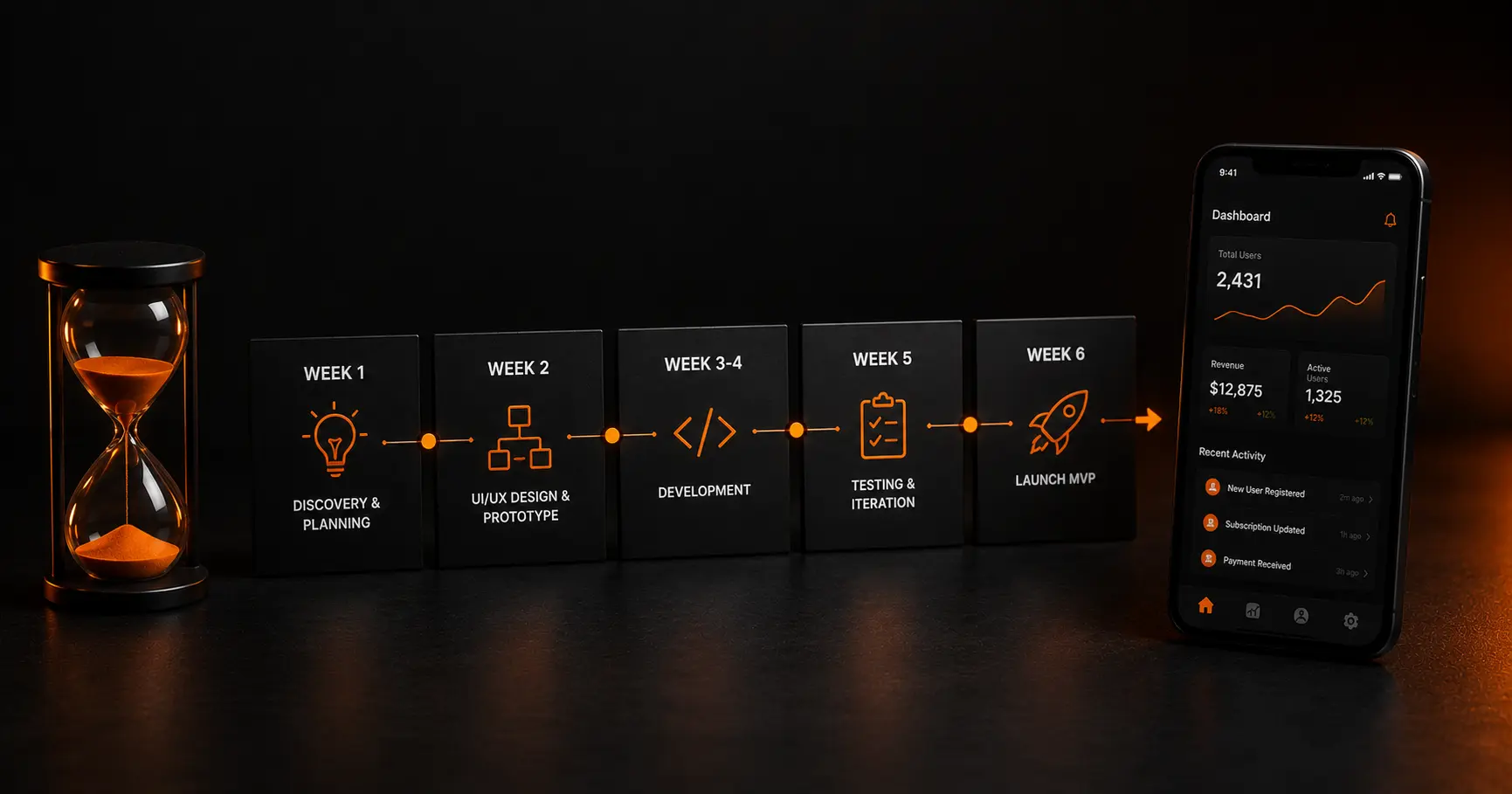
A disciplined SaaS MVP ships in a few weeks to a few months, depending on scope. A lean single-workflow product can launch in three to six weeks, while a standard B2B SaaS with billing and integrations takes longer. If a build is quoted at a year, the scope is not minimal and the project has drifted from MVP into full product.
Resources & Further Reading
- Stripe Billing Documentation: the reference for subscriptions, trials, proration, and dunning.
- Martin Fowler: MonolithFirst: why startups should begin with a monolith, not microservices.
- Paul Graham: Do Things That Don’t Scale: the case against premature systems and over-engineering.
- Y Combinator: How to Build an MVP: scoping the smallest useful product.
- CB Insights: Why Startups Fail: the data on building without market demand.
- The Lean Startup: build-measure-learn and the discipline of shipping small.