

Key Takeaways
How to tell when a platform has stopped saving you time, what leaving actually costs, and the two numbers most build-versus-buy comparisons miss.
- NIST’s definition of SaaS says the consumer does not control application capabilities, apart from limited user-specific configuration settings.
- Accounting rules put your platform implementation costs in the same income statement line as the hosting fee, which hides what configuration cost you.
- The UK competition regulator found in July 2025 that egress fees are a key commercial barrier to switching cloud providers.
- The EU Data Act removes switching and data egress charges entirely from 12 January 2027, which changes where you stand on a known date.
- Domestic software development is deductible again for tax years beginning after 31 December 2024, and licensed software is excluded from that treatment.
NIST wrote the boundary into the definition fifteen years ago. In Special Publication 800-145, published September 2011, the consumer of Software as a Service “does not manage or control the underlying cloud infrastructure including network, servers, operating systems, storage, or even individual application capabilities, with the possible exception of limited user-specific application configuration settings.”
Read the last clause again. Your control ends at configuration settings. That is not a complaint about a vendor. It is what you bought.
So the question is not whether the platform is good. It is whether your next requirement is a setting. When it stops being a setting, the platform has stopped being the shortcut, and the decision becomes a comparison of three numbers: what staying costs, what leaving costs, and what owning costs after tax.
The platform stops being the shortcut at a definable point
There is a line, and you can test for it rather than argue about it.
Quick Verdict: Write your next five requirements and mark which ones are settings. If most are not, start pricing a build. Velcod does this as SaaS development, and the adjacent starting point is B2B SaaS MVP development when the product is the business rather than the back office.
Call it THE CONFIGURATION CEILING. Below the ceiling, every need maps to a field, a rule, a role or a template. Above it, you are asking the vendor to change the product, and a vendor serving thousands of customers will not change it for you.

The useful part of that definition is that it gives you a test with no emotion in it. Ask what the workaround is for each unmet need, and count how many involve a spreadsheet, a second tool, or a person doing something by hand every week.
Three workarounds is a product with gaps. Seven is a second system you are operating without admitting it.
| Your requirement | Verdict |
| A new field, role or rule | Setting. Stay |
| A different approval sequence | Usually a setting. Stay |
| A calculation the product does not do | Above the ceiling |
| Data joined across two of your systems | Above the ceiling |
| A workflow your competitors cannot copy | Above the ceiling, and strategic |
Do this: List your next five requirements and mark each as setting or not. The count is the decision, not the feeling.
Count the configuration you cannot take with you
The money you spent making the platform fit is real, it is on your balance sheet, and it does not travel.
Under US accounting rules, implementation costs for a hosting arrangement that is a service contract are capitalized as though the arrangement were an internal-use software project. ASU 2018-15 states that costs “for implementation activities in the application development stage are capitalized,” and that capitalized costs “shall be amortized over the term of the associated hosting arrangement.”
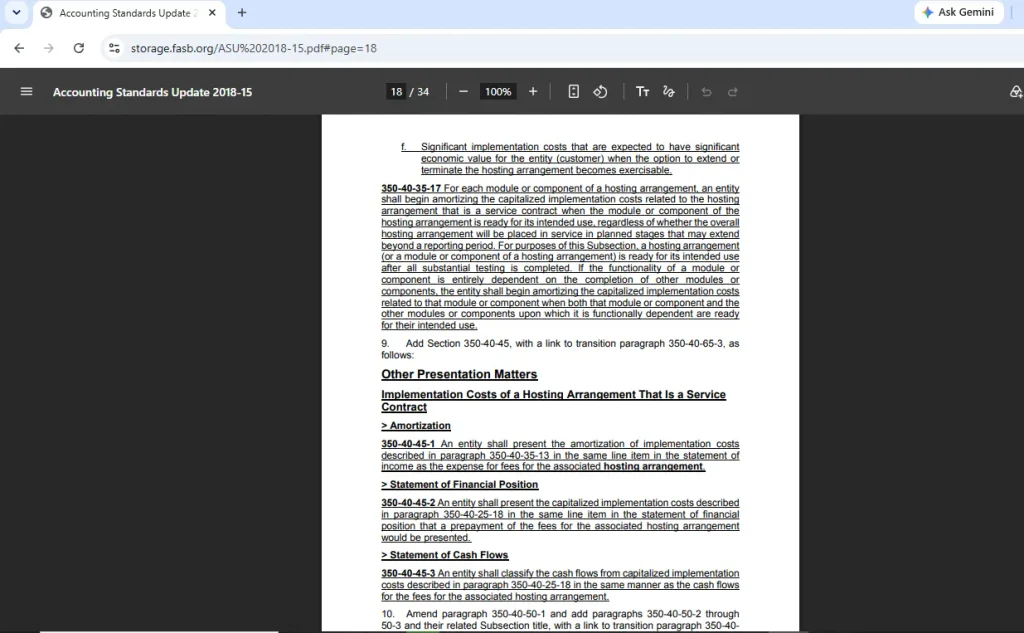
Then comes the part that hides the cost. Paragraph 350-40-45-1 requires an entity to present “the amortization of implementation costs” in the same line item as the hosting fee expense, and 350-40-45-2 puts the capitalized amount where a prepayment of hosting fees would sit.
Call it THE HIDDEN LINE. Your platform cost and your platform configuration cost are the same number in your accounts, so nobody sees how much of it is work you cannot carry to a new vendor. We publish that split in our case studies because it is the figure clients most often have never separated.
Do this: Ask finance to split the platform line into subscription and amortized implementation. That second figure is your sunk configuration.
Price the exit before you price the build
The cost of staying is set by the cost of leaving, and the second number is the one nobody has.
A competition regulator has now measured this. The UK Competition and Markets Authority’s summary of final decision, dated 31 July 2025, found that “A key commercial barrier is the presence and magnitude of egress fees,” and that these fees “reduce the ability and incentives for customers to switch or multi-cloud.”
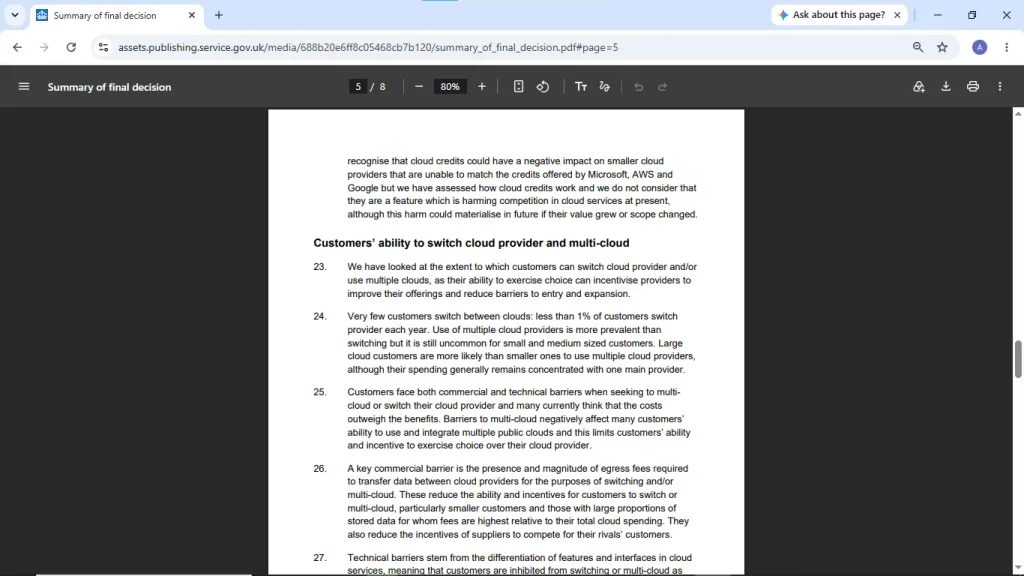
Be precise about what that covers. The CMA investigated cloud infrastructure providers rather than vertical application vendors, so treat it as evidence that switching costs are real and measurable, not as a finding about your specific tool.
Your own exit bill has four lines, and you can get all four this week.
| Exit line | How to get the number |
| Data export | Request a full export and time it |
| Format cost | Open the export and see if it is usable |
| Rebuilt configuration | The amortized figure from section two |
| Parallel running | Weeks of two subscriptions, times both bills |
That last line is the one people forget, and it is often the largest. The mechanics of getting out are the same shape as any move off a no-code platform, where the export is rarely the hard part and the format usually is.
Do this: Request a full data export today, before you have any intention of leaving. The response time is the finding.
One known date changes your negotiating position
Most bargaining positions improve slowly. This one improves on a published date.
The European Commission’s Data Act explainer states that the regulation “applies since 12 September 2025,” and that from 12 January 2027 it will “entirely remove switching charges, including charges for data egress.” During the transitional window that began on 11 January 2024, providers “may still charge their customers for the costs incurred in relation to switching and data egress.”

The explainer also says that “All providers are required to remove obstacles that their customers may face when they want to switch to another provider,” and that providers of Platform and Software as a Service must export data in a “commonly used and machine-readable format.”
This matters to a US company for a practical reason rather than a legal one. A vendor that has to build compliant export paths for European customers tends to have those paths available generally, so the question to ask your account manager is what their Data Act export looks like.
Do this: Email your vendor and ask which export format satisfies the Data Act requirement. Keep the reply.
Compare after tax, not before
A subscription and a build are taxed differently, and comparing them pre-tax compares the wrong numbers.
The treatment changed recently and in your favor if you build. IRS Revenue Procedure 2025-28 describes section 174A(a), under which “a deduction is allowed for any domestic research or experimental expenditures,” limited to “amounts paid or incurred in taxable years beginning after December 31, 2024.”
Software is explicitly inside that category. Under section 174A(d)(3), “any amount paid or incurred in connection with the development of any software is treated as a research or experimental expenditure.” The procedure also notes that taxpayers may instead elect to “amortize such expenditures ratably over a period of not less than 60 months.”

Two details stop this from being a loophole. Section 174 now “applies only to foreign research or experimental expenditures,” which remain amortized over fifteen years, so where the work happens changes the answer. And acquired, leased or licensed computer software is excluded from this treatment entirely.
None of this is tax advice and the rules carry conditions and elections. The point is narrower: run both options past your accountant before you compare them, because the pre-tax comparison is not the comparison.
Do this: Send your accountant one question. How would a domestic build be treated against the subscription we pay now.
Per-seat pricing taxes your headcount, not your usage
Per-seat pricing charges you for hiring. That is fine while headcount and value move together, and expensive when they stop.
The divergence has a shape. Early on, each new seat is a new person getting real use from the tool. Later, you are adding seats for people who need read access, or who touch the system twice a month, and you are paying the same rate for both.

The honest caveat is that the crossover is specific to you and the chart above has no numbers on it for that reason. A tool at the center of daily work rarely crosses over. A tool that forty people touch occasionally crosses over sooner.
The practical move is cheaper than a build. Audit seat usage, downgrade or remove the occasional users, and see what the bill looks like. If the number still bothers you after that, the problem is the model rather than the waste.
Do this: Pull last quarter’s seat usage. Count how many seats were used fewer than four times a month.
Build the part that is yours and keep buying the rest
Custom does not mean replacing everything. It usually means building one layer and buying the commodities underneath.
Nobody should write their own authentication, payments, email delivery or object storage to escape a seat licence. The thing worth building is the workflow that reflects how you specifically operate, because that is both the part no vendor will build and the part competitors cannot copy.
| Layer | Default |
| Your core workflow and data model | Build |
| Reporting your customers see | Build, if it differentiates |
| Authentication, payments, email | Buy |
| Storage, hosting, monitoring | Buy |
| Generic back office | Buy |
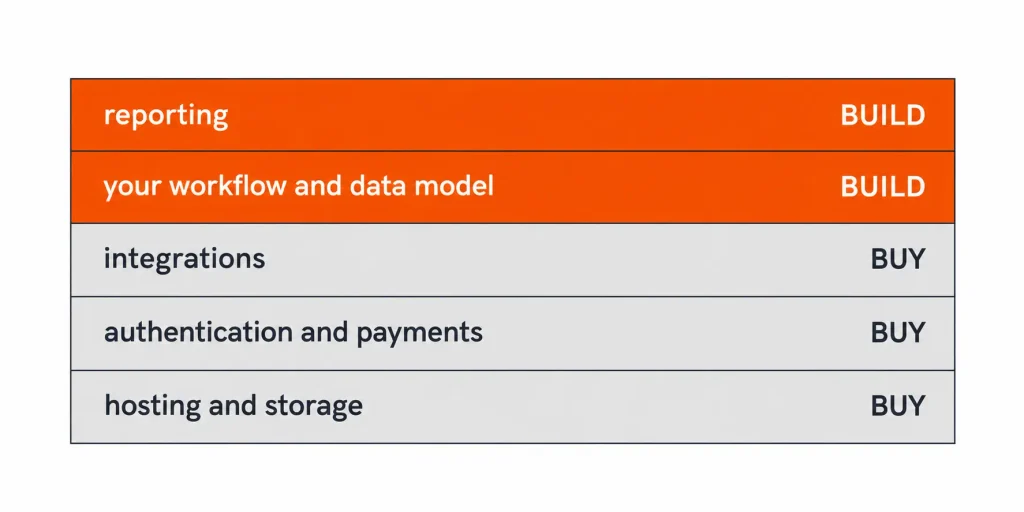
The layer worth building is the one that carries your difference. If the platform is preventing you from operating the way you win, that is a positioning problem wearing a software costume, and it is worth reading alongside positioning against competitors before anyone writes code.
Do this: Draw the five bands for your own stack and mark each build or buy. Anything you marked build that is not your difference, move it back.
Make the first build prove one thing
The first release is not a replacement. It is a test of the one assumption the whole decision rests on.
Pick the single workflow that is furthest above the configuration ceiling and build only that, running alongside the platform rather than instead of it. You are testing whether your team uses it when they have a choice, which is the only adoption signal that means anything.

Set the gate before you start, in writing, including what you will do if the answer is no. Teams that skip that step tend to migrate anyway, because by then the build exists and stopping feels like waste.
Keep the first build small enough that stopping is cheap. If an AI-assisted feature is part of the case for building, price that separately, because ongoing model usage behaves like AI agent development cost rather than like a one-time build.
Do this: Write the pass condition for your first build in one sentence, with a number and a date, before scoping anything.
What this will not fix
Owning the software moves the problem rather than removing it.
You inherit the maintenance you were renting. Platform upgrades, security patches, dependency expiry and on-call all become yours, and that obligation does not end. Anyone comparing a subscription to a build without a line for ongoing ownership is comparing a recurring cost to a one-time one.
The evidence here also has edges worth naming. The CMA studied cloud infrastructure rather than vertical SaaS applications, the Data Act is European law that affects US buyers indirectly through vendor behavior, and the tax treatment carries conditions, elections and a domestic versus foreign distinction that depends on facts we cannot see.
And a build does not fix a process nobody agrees on. If three departments want three different workflows, the platform was not the constraint. Custom software will encode the disagreement instead of resolving it, at considerably greater expense.
The decision checklist
Eight items. Most are answerable this week and none of them needs a vendor conversation.
- How many of your next five requirements are settings rather than product changes?
- How many manual workarounds does your team run every week?
- What is the amortized implementation figure sitting in your platform line?
- How long did a full data export take, and is the format usable?
- What would parallel running cost, in weeks times two subscriptions?
- What does your vendor say its Data Act export format is?
- How many seats were used fewer than four times a month last quarter?
- Which single layer of your stack actually carries your difference?
We work through this list before quoting anything, including on the three-week MVP builds where the fastest honest answer is sometimes to stay on the platform.
Where we fit
We build custom software, so we are the wrong people to ask whether your platform is good enough. Stating it before anything else.
What we do about it is run the checklist first and tell you when the answer is stay. The most common genuinely useful outcome is narrower than a replacement: build the one workflow above the ceiling, keep the platform for everything else, and connect them. That is a smaller project than most founders expect when they first call.
This is not the right purchase for everyone. If your workarounds number two or three, fix those instead. If your seat bill is inflated by occasional users, an access audit is free and a build is not. If your departments disagree about the process, settle that first.
If you want the eight answers written down against your own numbers, book a call with us and bring last quarter’s platform invoice.
Frequently Asked Questions
When is custom SaaS development cheaper than a subscription?
Rarely on licence cost alone, and more often once you count workaround labor, sunk configuration and the seats you pay for but barely use. The comparison also changes after tax, because domestic software development is deductible for tax years beginning after 31 December 2024 while licensed software is excluded from that treatment. Get your accountant to run both.
What does it cost to migrate off a SaaS platform?
Four lines, and the subscription is not the biggest. Data export, the cost of making an unusable export format usable, rebuilding the configuration you had paid to create, and running both systems in parallel during the switch. Parallel running is usually the largest and the most frequently forgotten.
Can I build custom software and keep some SaaS tools?
That is the normal answer, not a compromise. Build the workflow and data model that reflect how you operate, and keep buying authentication, payments, email delivery, storage and monitoring. Custom projects that fail tend to have built the commodity layers and bought the differentiating one.
How do I know the platform is the real problem?
Count the manual workarounds your team runs weekly, and check whether your unmet needs are configuration settings or product changes. If three departments want three different processes, the platform is not the constraint. Custom software will encode that disagreement rather than resolve it.
Does the EU Data Act apply to a US company?
Not directly, and it still changes your position. The regulation requires providers to remove switching obstacles and removes switching and egress charges from 12 January 2027 for customers in scope. Vendors building compliant export paths for European customers generally make them available more broadly, so it is worth asking yours.
Resources
- The NIST Definition of Cloud Computing, Special Publication 800-145, Peter Mell and Timothy Grance, National Institute of Standards and Technology, September 2011. The formal definition of Software as a Service and the limit of consumer control to configuration settings.
- ASU 2018-15, Internal-Use Software (Subtopic 350-40), Financial Accounting Standards Board. Capitalization of cloud implementation costs, their amortization over the hosting term, and the presentation rules that place them beside the hosting fee.
- Cloud services market investigation, summary of final decision, Competition and Markets Authority, 31 July 2025. Findings on egress fees, committed spend agreements and technical barriers to switching.
- Data Act explained, European Commission. The application date, the transitional charging window, and the removal of switching and data egress charges from 12 January 2027.
- Revenue Procedure 2025-28, Internal Revenue Service. Section 174A treatment of domestic research or experimental expenditures, the inclusion of software development, and the exclusion of licensed software.